
Despite repeated skepticism about the long-term viability of digital currencies, the crypto markets have defied expectations. Bitcoin, for instance, reached new all-time highs throughout 2024, 2025, and continues to command institutional interest amid growing regulatory clarity. Its price momentum has lifted entire ecosystems, including publicly traded companies with crypto exposures.
The Expanding Cryptocurrency Market
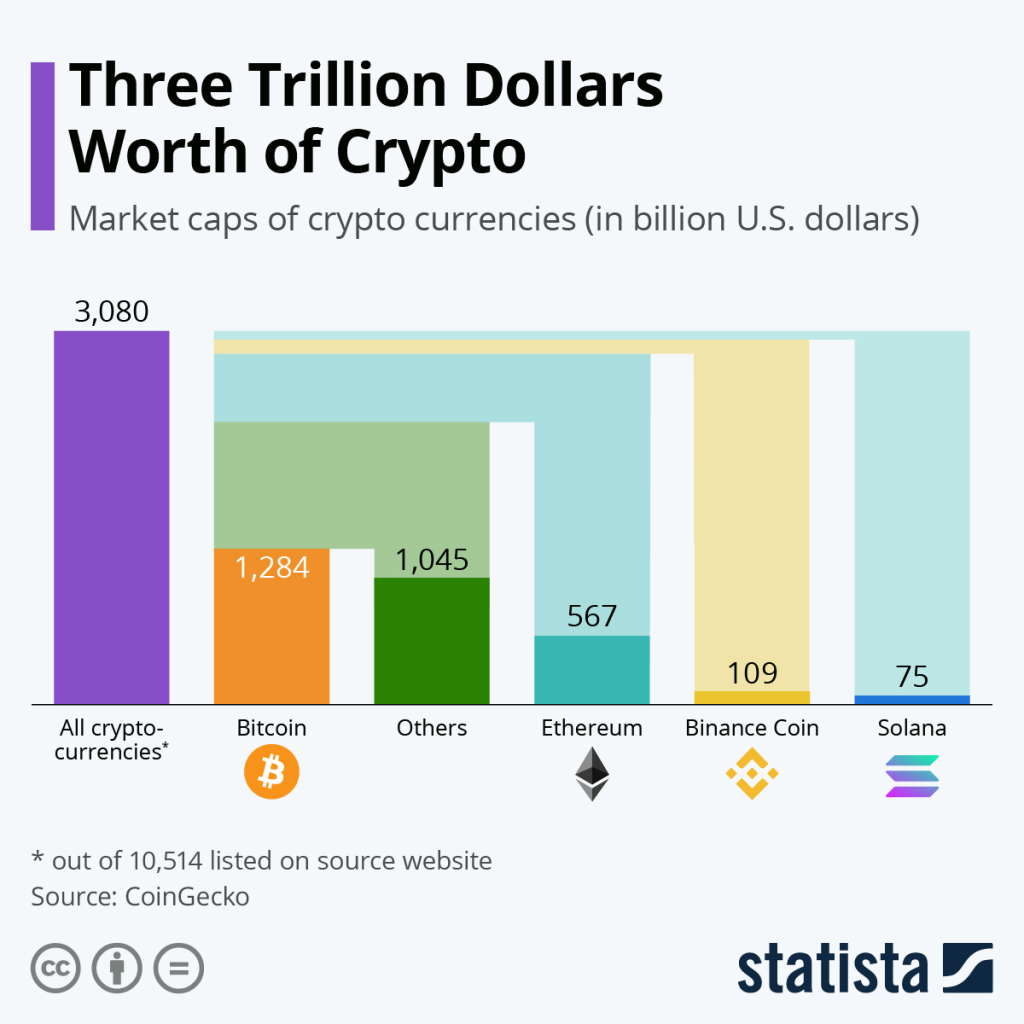
Cryptocurrency has evolved from niche skepticism to mainstream momentum. After the U.S. approval of spot Bitcoin ETFs and renewed political support, the total crypto market capitalization surged past $4 trillion in mid-2025, doubling from under $2 trillion a year earlier. Bitcoin alone topped $123,000 in value, aiding overall adoption and investment sentiment.
Bitcoin spot ETFs, notably BlackRock-managed funds, have crossed $100 billion in assets, underscoring intensifying demand from traditional investors. Corporate interest also grows. At least 36 new public companies are expected to hold Bitcoin by early 2026, pushing total corporate Bitcoin holdings up 120% in 2025, now exceeding 247,000 BTC. Double the U.S. ETF supply.
Beyond price action and corporate treasuries, the regulatory landscape is also maturing. In the U.S., the SEC’s cautious approval of ETFs has been paired with clearer tax reporting rules, while Europe’s MiCA framework is setting global standards for licensing and consumer protections. Meanwhile, countries such as the UAE and Singapore are positioning themselves as crypto-friendly hubs, attracting exchanges, custodians, and mining firms. This convergence of regulation, infrastructure, and institutional adoption is turning crypto from a speculative asset class into a legitimate segment of the global financial system.
Leading Public Crypto Companies in 2025
These companies are not just beneficiaries of Bitcoin’s price rally. They operate critical infrastructure, control vast reserves of digital assets, and act as bellwethers for institutional sentiment. Their valuations reflect both current performance and their role in shaping the future of crypto adoption.

Coinbase (NASDAQ: COIN) – Market cap around $82 billion. The largest U.S. crypto trading platform, handling billions in daily volume across more than 200 assets. Coinbase also runs one of the world’s most trusted custody solutions, safeguarding over $150 billion in assets for institutions, and has steadily grown its derivatives and staking services.
Website: https://www.coinbase.com

MicroStrategy (NASDAQ: MSTR) – Market cap roughly $104 billion. While still providing business analytics software, its aggressive Bitcoin acquisition strategy dominates investor attention. As of mid-2025, the firm controls more than 250,000 BTC, making it the largest corporate holder worldwide, with its equity often viewed as a proxy for Bitcoin exposure.
Website: https://www.strategysoftware.com

Marathon Digital (NASDAQ: MARA) – Market cap near $5.8 billion. Operating one of the largest fleets in North America, Marathon has achieved hash rates above 57 EH/s, placing it among the top global mining operators. The company continues to reinvest in efficiency and renewable-powered facilities to maintain competitiveness.
Website: https://www.mara.com

Riot Platforms (NASDAQ: RIOT) – Valued around $4.2 billion. With its nearly 1-gigawatt Texas campus, Riot is expanding to 41 EH/s in targeted capacity by late 2025. It has positioned itself as a leader in vertically integrated mining operations, often negotiating directly for low-cost power contracts in energy-rich regions.
Website: https://www.riotplatforms.com

CleanSpark (NASDAQ: CLSK) – About $2.7 billion in value. The firm emphasizes operational independence by owning its infrastructure outright. It has steadily lowered its all-in mining costs and is investing heavily in renewables, making it one of the more environmentally sustainable public miners in the U.S.
Website: https://www.cleanspark.com
Emerging Players in the Public Crypto Space
Beyond the giants, several smaller public companies are drawing investor interest for their niche strategies, infrastructure, or innovation potential. These companies have the potential to become major players should they achieve their planned strategies.

1. BitFuFu Inc. (NASDAQ: FUFU)
Based in Singapore, BitFuFu mines Bitcoin and offers institutional mining services. Revenue grew from $198 million in 2022 to $463 million in 2024. The company went public via SPAC in 2024 and now represents about 4% of a major Bitcoin ETF’s holdings. Its rapid growth, transparent reporting, and public profile make it a notable contender.
Website: https://www.bitfufu.com

Australia-headquartered, IREN uses exclusively renewable energy and operates data centers across Canada and the U.S. It recently achieved a midyear hash rate milestone of 50 EH/s and has delivered triple-digit sales growth. Analysts now expect profitability by 2026. Its work includes GPU-powered AI cloud services.
Website: https://iren.com

3. Hyper Bit Technologies Ltd. (CSE: HYPE)
A Vancouver-based miner operating an 11 MW hydro-powered facility. It maintains one of the lowest all-in mining costs in the industry, $0.07 per kWh, including operations. The company is pursuing acquisitions of up to 2,400 miners and has shown access to a lead list of 22,000 across North America. It is listed in Canada and actively pursuing an OTCQB uplisting.
Website: https://www.hyperbit.ca
Why These Companies Matter
The dominant players demonstrate how scale, infrastructure, and crypto holdings translate into substantial valuations. Marathon, Riot, and CleanSpark show that miners can monetize operational excellence and energy economics. Coinbase and MicroStrategy embody strategic ownership or access to the digital asset economy.
Among smaller firms, BitFuFu shows how rapid growth and transparent operations can earn investor trust. IREN offers a compelling mix of renewables, institutional product, and AI infrastructure. HyperBit presents a low-cost platform and visible roll-up strategy, offering asymmetric upside as it scales.
Investors seeking high-leverage opportunities might do well to follow firms that combine strategic positioning, renewable power, growth pipelines, and efficient operations, with access to public capital markets.
The public crypto marketplace is maturing. A few billion-dollar miners and holding companies now anchor investor sentiment. The next wave, smaller, agile firms like IREN, BitFuFu, and HyperBit, could offer outsized returns for those watching the markets closely.
Institutional Capital Flows
One of the defining forces behind the rise of public crypto companies is the growing wave of institutional capital. The approval of spot Bitcoin ETFs in the United States opened the door for pension funds, endowments, family offices, and conservative wealth managers to gain exposure to digital assets without directly handling private keys or navigating exchanges. With BlackRock, Fidelity, and other asset managers controlling ETFs that now hold over $100 billion in Bitcoin, the appetite for regulated access is undeniable.

This surge in ETF adoption has created a spillover effect for listed companies with crypto exposure. For many institutional investors, owning shares in Coinbase, MicroStrategy, or even emerging miners represents a way to participate in the upside of digital assets while staying within compliance frameworks. Public companies act as proxies for Bitcoin itself, offering liquidity, audited reporting, and governance oversight that private firms or tokens often lack.
Corporate treasuries add another layer. While MicroStrategy pioneered the idea of using Bitcoin as a reserve asset, dozens of other public firms are beginning to follow suit. Each additional company that adds Bitcoin to its balance sheet validates the asset further in boardrooms and capital markets. This trend has a compounding effect: as corporate holdings grow, public perception shifts, creating a cycle that benefits both the underlying cryptocurrency and the equities tied to it.
Competitive Risks and Opportunities
While the opportunity set is enormous, competition within the public crypto space is intensifying. Bitcoin miners face what is often described as an “arms race” — efficiency in energy use, access to low-cost power, and speed of equipment deployment determine survival. Firms such as Riot Platforms and Marathon have staked their claims on scale, while emerging players like IREN and HyperBit are carving out niches in renewable energy and hydro-powered operations. The race for efficiency will become even more critical after the next Bitcoin halving, when margins compress and only the leanest operators can thrive.
Exchanges and service providers also face both risks and opportunities. Coinbase enjoys first-mover advantage in the U.S., but it faces growing competition from decentralized exchanges, offshore platforms, and traditional financial institutions experimenting with tokenized assets. Its ability to remain compliant and innovate at the same time will determine whether it maintains its dominant position or loses ground to nimbler competitors.
On the opportunity side, diversification beyond mining or exchange services is emerging as a major theme. Several firms are repurposing mining infrastructure into high-performance computing hubs for artificial intelligence and cloud services, blurring the lines between crypto and broader tech sectors. Others are positioning themselves to benefit from tokenization of assets, where real-world securities, commodities, and even real estate are moved onto blockchains. These adjacencies create new revenue streams and hedge against Bitcoin’s natural volatility.
For investors, this landscape means both risk and asymmetric reward. Smaller firms could become acquisition targets for larger players seeking scale, while industry leaders must continuously innovate to defend their positions. The competitive dynamics will determine which companies transition from niche operators into enduring pillars of the digital economy.